
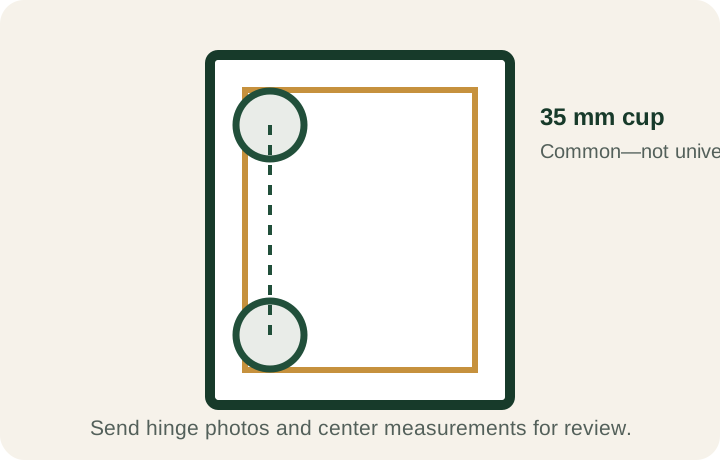
Photos and measurements are better than guessing.
- Photo of the hinge attached to the existing door
- Photo of the mounting plate inside the cabinet
- Door thickness
- Distance from the top edge to the center of the upper cup
- Distance from the bottom edge to the center of the lower cup
- Number of hinges on tall doors
What is a 35 mm hinge cup?
Many European-style concealed cabinet hinges use a round 35 mm cup bored into the back of the door. The cup diameter is common, but the distance from the door edge and the hinge-center positions are not universal. That is why we ask for photos and measurements rather than assuming one standard.
Can I reuse my existing hinges?
Often, yes. Reusing a hinge that already works can simplify the project, provided the new door thickness, overlay and boring dimensions are compatible. Send the model number when visible.
Hinge side and door handing
Label each door as left-hinged, right-hinged or undrilled. For pairs, identify the cabinet location so the boring is not reversed.
When should I order doors without boring?
Choose no boring when you are using surface-mounted hinges, when your installer will drill on site, or when the hardware has not been selected. Undrilled doors give the installer more flexibility but require accurate drilling equipment.
1/2-inch overlay soft-close hinges are included.
These hinges are a common choice for face-frame cabinets where the door overlays the opening by approximately 1/2 inch. Send clear photos of the current hinge and mounting plate so we can confirm compatibility before the doors are made.
Why 1/2-inch overlay matters
- Overlay affects how the door sits on the cabinet
- The mounting plate must match the cabinet construction
- Hinge boring locations must be confirmed
- Inset, full-overlay and specialty hinges may require a different option
Send hinge photos with your quote.
Clear pictures can prevent the most expensive type of custom-door mistake.