
Tools to gather
- A rigid tape measure with 1/16-inch markings
- Paper, spreadsheet or printed door list
- Pencil and cabinet labels or painter’s tape
- Phone camera for door, hinge and layout photos
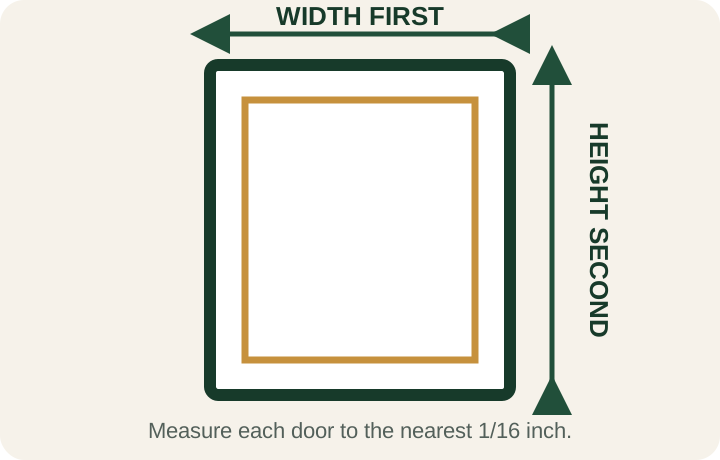
Method 1: Measure the existing doors
- Remove or open the door so you can reach both edges clearly.
- Measure the width first from left edge to right edge.
- Measure the height second from top edge to bottom edge.
- Record the size to the nearest 1/16 inch.
- Measure every door and label its cabinet location.
- Repeat the process for every drawer front.
Do not assume a row of doors is identical. Older cabinets may have small size differences that are not obvious until the doors are removed.
Method 2: Measure cabinet openings and calculate overlay
Use this method when there are no existing doors, when the current doors do not fit correctly, or when you are changing the overlay and hinge type.
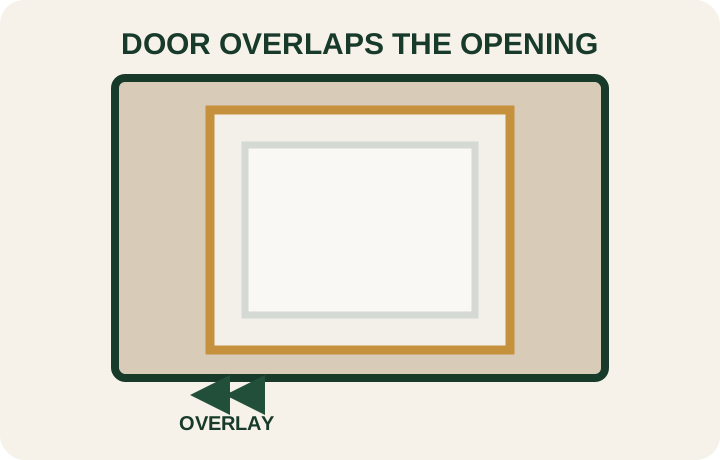
Single-door opening
Measure the opening width and height. Add the planned overlay to both sides of each dimension. For a 1/2-inch overlay on all four sides:
Door height = opening height + 1 inch
Example: a 14-inch-wide by 24-inch-high opening with a 1/2-inch overlay on every side generally uses a 15-inch-wide by 25-inch-high door.
Double-door opening
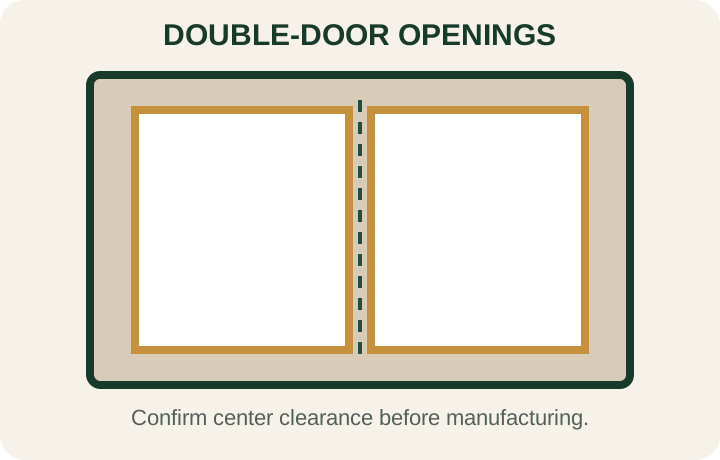
Measure the full opening, calculate the outside overlay, and allow the intended center gap. Because hinge overlay and center clearance interact, send double-door calculations to us for review before production.
Inset doors
Inset doors fit inside the opening and require clearance on every side. Cabinet openings are not always perfectly square, so inset orders should include width and height measured in more than one location. We strongly recommend speaking with us before ordering inset doors.
How to measure drawer fronts
- Measure the existing drawer front whenever it fits correctly.
- Record width first and height second.
- Measure each drawer front individually.
- Note whether the front is a flat slab or a matching routed profile.
- Label each front by cabinet location.
Hinge information to record
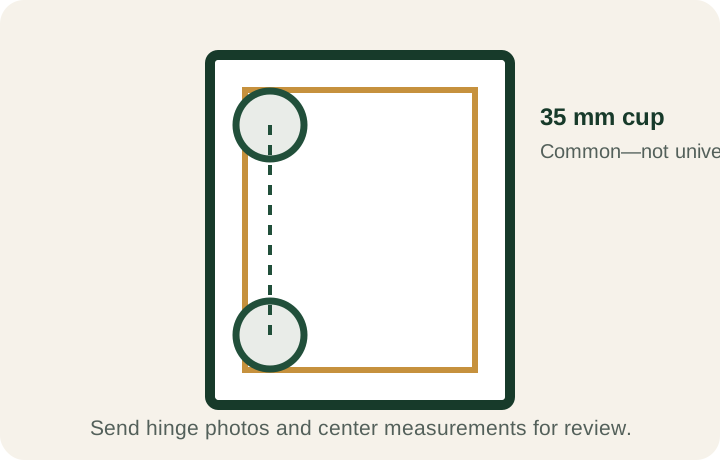
Take photos of the hinge attached to the door and cabinet. For concealed hinges, measure from the top edge of the door to the center of the upper cup hole and from the bottom edge to the center of the lower cup hole. Also photograph the hinge plate inside the cabinet.
Build a clear order list
| Label | Width | Height | Quantity | Hinge side | Notes |
|---|---|---|---|---|---|
| Sink left | 14 15/16" | 29 7/8" | 1 | Left | Reuse hinges |
| Sink right | 14 15/16" | 29 7/8" | 1 | Right | Reuse hinges |
| Top drawer | 29 7/8" | 6 1/4" | 1 | — | Slab front |
Final check before sending
- Width is written before height on every item
- Fractions are clearly marked
- Door and drawer-front quantities are included
- Hinge photos are attached
- Oversized or unusual pieces are identified
- Shipping ZIP code is included
Questions that prevent mistakes
What is the safest way to measure replacement doors?
If the existing doors fit correctly and you are keeping the same overlay and hinges, measure the actual doors rather than calculating from the openings.
How precise should measurements be?
Record width and height to the nearest 1/16 inch and measure each piece instead of assuming repeated sizes.
What does overlay mean?
Overlay is the distance the door extends past the cabinet opening or face-frame edge.
How do I measure double doors?
Measure the full opening and confirm the overlay and center clearance. Send the calculation to us for review before manufacturing.
Can you review my handwritten measurement list?
Yes. Upload a clear photo or PDF with each item labeled and include wide photos of the cabinet layout.
Cabinet door measurement checklist
Measure every piece
Do not assume matching-looking doors are identical. Record width × height for each cabinet door and drawer front.
Use one method
If you are replacing existing doors, measuring the actual doors is usually the clearest method. If measuring openings, calculate overlay carefully and consistently.
Photograph hinges
Send a close photo of the hinge and cup hole when you want boring. Record the cup-center distance from the top or bottom edge.
Send your measurements for review.
Upload a handwritten list, spreadsheet PDF or clear photos. We will contact you before an invoice is issued.